You go in to wake him up, and the fight starts before his feet hit the floor.
The shoes are wrong. The breakfast is wrong. His sister looked at him.
By the time the school bus pulls away, you’re holding the doorframe, grateful he’s somebody else’s problem for the next eight hours.
Your heart picks up before the bus does.
By 3:00, he’s home, and the volume goes back up.
Picking on his sister.
Ignoring you.
Then disappearing into his room with the door shut.
You sit on the couch at 8 pm replaying the day, wondering what you did wrong, wondering how to give him back the kid he used to be.

Reward charts. Sticker systems. Three different parenting podcasts.
You’ve read the chapter on connection before correction.
You’ve taken away the screen and given it back.
Some of it works for a week.
None of it sticks.
The hardest part isn’t the bad days.
It’s that you don’t know which lever to pull anymore.
And your kid feels that you don’t know.
I’m Abby.
When your child walks into my office, the work doesn’t start on a couch.
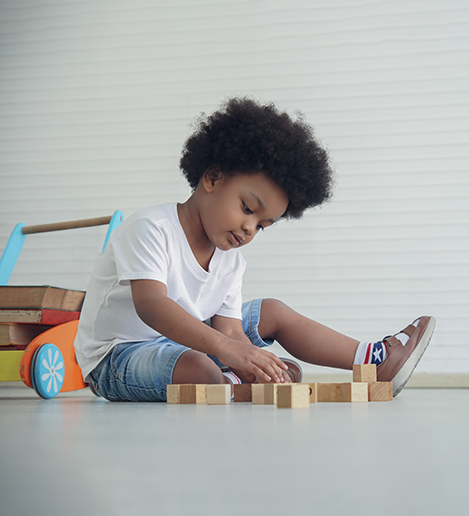
It starts on the floor.
We play Uno.
Face cards.
Army men.
A round of dress-up if that’s what the day calls for.
Children don’t sit in a chair and talk about their feelings. They show you. And that’s where the breakthroughs happen.
Play therapy is not all fun and games.
There’s hard work and frustration interwoven with the games.
There will be weeks when it looks like nothing is happening.
That’s part of the process.
Your job during those weeks is to keep bringing him.
My job is to keep building the relationship until he tells me, in whatever language he has, how he really feels.
What we build in my room doesn’t stay there.
You and I talk, too.
You’ll learn what’s under the morning fight.
You’ll learn which battle to skip and which one is worth holding.
When school calls, you’ll have language for the meeting.
When his sister gets picked on at 3:00, you’ll have a move that isn’t a punishment or a lecture.
Mornings get quieter.
The 2:45 dread loosens its grip.
He comes out of his room without being called.
The siblings still fight, because siblings fight.
But the fights end, and somebody apologizes by bedtime.
Most importantly, his smile will come back.
He’ll be that happy child you had before.
Your child still has the happy kid in him.
If you’re ready to help your child feel better, schedule your free 15-minute consultation today.
There's a version of your life where your child feels safe in their own skin. Where dinner is just dinner. Where 2 am is for sleeping. That version starts with a conversation.
Call for your free 15-minute consultation.
Tell me a little about what's going on. I'll get back to you within one business day.
Abby